
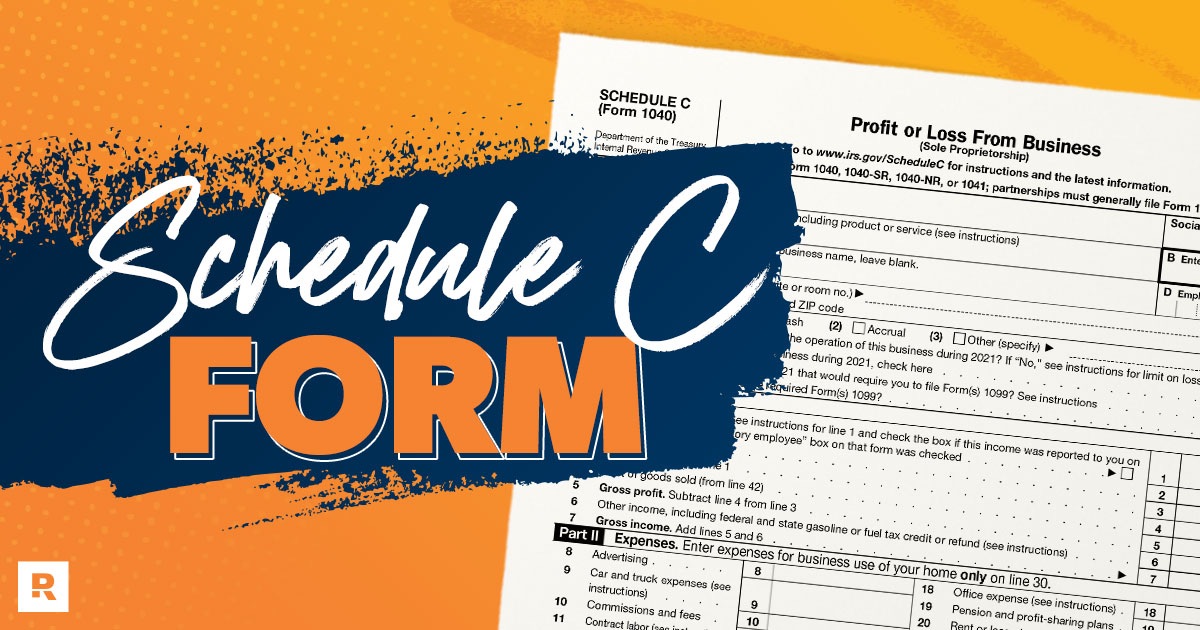
If you’re running a business as a sole proprietor, freelancer, independent contractor, or gig worker, Schedule C (Form 1040) is essential. This form reports business income and expenses to the IRS, calculating net profit or loss that flows to your individual tax return. Proper completion can unlock significant deductions, reduce taxable income, and minimize self-employment taxes. For tax year 2025 (filed in 2026), updates from inflation adjustments and recent legislation make it even more important to stay current.
This comprehensive guide covers the basics, eligibility, line-by-line instructions, key 2025 changes, common errors, and strategies to optimize deductions. Use IRS resources like Publication 334 and the official instructions for the most accurate details.
What Is Schedule C and Who Needs to File It?
Schedule C, “Profit or Loss From Business,” attaches to Form 1040 (or 1040-SR) to report income or loss from a sole proprietorship or single-member LLC (taxed as a disregarded entity by default). It determines net profit subject to income tax and self-employment tax (approximately 15.3% for Social Security and Medicare).
• Key Role: Tracks non-W-2 business income (e.g., from 1099-NEC/MISC forms, cash payments, or platforms like Uber, Etsy, or Upwork).
• Filing Threshold: Required if net earnings from self-employment are $400 or more.
• Who Files:
• Sole proprietors and single-member LLCs.
• Gig economy participants (rideshare, delivery, freelancing).
• Service-based or product-selling businesses without corporate election.
• Exclusions: Partnerships (Form 1065), corporations (1120 or 1120-S), or hobbies (no profit motive; limited deductions).
• Impact: Net profit increases taxable income and triggers self-employment tax. Losses can offset other income, subject to limits like excess business loss rules (Form 461).
Millions file Schedule C annually, especially with gig work growth.
Key Updates for Tax Year 2025
Recent changes include inflation adjustments and provisions from laws like the One Big Beautiful Bill Act:
• Standard Mileage Rate: 70 cents per mile for business use (up from 67 cents in 2024). Medical/moving: 21 cents; charitable: 14 cents.
• Bonus Depreciation: 100% for certain qualified property placed in service after January 19, 2025 (elect lower rates if preferred; see Form 4562).
• Section 179 Expensing: Maximum deduction $2.5 million (phase-out starts at $4 million in assets).
• Qualified Business Income Deduction (QBID/Section 199A): Still up to 20% of qualified business income for eligible pass-throughs. Phase-out thresholds for specified service trades or businesses (SSTBs) start around $197,300 (single) / $394,600 (joint), with full phase-out higher—confirm exact amounts via IRS updates.
• Other Notes: Domestic research expenses deductible currently or amortized; potential deductions for qualified tips/overtime on Schedule 1-A (not Schedule C); gig reporting thresholds via 1099s.
• No Major Form Redesign: Core structure remains; check IRS.gov/ScheduleC for latest drafts and instructions.
Line-by-Line Breakdown: Completing Schedule C
Use tax software for accuracy, but understand the manual process. Report in whole dollars; choose cash or accrual accounting consistently (most use cash).
Part I: Income (Lines 1–7)
• Line 1: Gross receipts/sales (all business income, including 1099s, bartering).
• Line 2: Returns and allowances.
• Line 3: Line 1 minus 2.
• Line 4: Cost of goods sold (COGS; detail in Part III for inventory businesses).
• Line 5: Gross profit (Line 3 minus 4).
• Line 6: Other income (e.g., tips reported here if business-related, interest).
• Line 7: Gross income (Line 5 + 6).
Track income diligently—underreporting risks audits.
Part II: Expenses (Lines 8–27)
Deduct ordinary and necessary expenses (common in your industry and helpful for business).
• Line 8: Advertising.
• Line 9: Car/truck expenses (standard mileage at 70¢/mile or actual costs; detail in Part IV).
• Line 10: Commissions/fees.
• Line 11: Contract labor (issue 1099-NEC for $600+ payments).
• Line 12: Depreciation/amortization (Form 4562).
• Line 13: Employee benefits (if applicable).
• Line 14: Insurance (business only).
• Line 15: Interest.
• Line 16: Legal/professional services.
• Line 17: Office expense.
• Line 18: Pension/profit-sharing.
• Line 19: Rent/lease (other than home office).
• Line 20: Repairs/maintenance.
• Line 21: Supplies (non-inventory).
• Line 22: Taxes/licenses (business-related).
• Line 23: Travel (100%); meals (50%, with records).
• Line 24: Utilities (business portion).
• Line 25: Wages (employees only).
• Line 26: Other expenses (detail in Part V, e.g., phone/internet).
• Line 27a: Total expenses (sum 8–26).
• Line 27b: (May reference other items per instructions).
Net Profit/Loss Calculation
• Line 28: Tentative profit (Line 7 minus 27a).
• Line 29: (At-risk rules; usually not applicable for most).
• Line 30: Home office deduction (simplified: $5/sq ft up to 300 sq ft = $1,500 max; or actual via Form 8829—exclusive/regular use required).
• Line 31: Net profit/loss (Line 28 minus 30). Positive flows to Schedule 1 (Form 1040) and Schedule SE; losses offset other income (with limits).
Additional Parts
• Part III: COGS (inventory method: beginning/end inventory, purchases).
• Part IV: Vehicle details (miles, logs required for mileage/actual).
• Part V: Other expenses list.
Related Forms and Attachments
• Form 4562: Depreciation/Section 179.
• Form 8829: Actual home office.
• Schedule SE: Self-employment tax.
• Form 1040-ES: Quarterly estimates (if tax liability $1,000+).
• Issue 1099s as needed.
E-file for faster processing.
Common Mistakes to Avoid
Audits target Schedule C filers (red flags: high losses, home office, round numbers).
• Mixing personal/business expenses (use separate accounts).
• Inadequate records (keep receipts/logs 3–7 years; use apps).
• Hobby misclassification (prove profit motive; IRS 3-of-5-year rule).
• Mileage errors (contemporaneous logs required).
• Missing QBID (Form 8995 if eligible).
• Skipping estimates (penalties apply).
• State variations (e.g., Illinois adjustments).
Optimization Strategies for 2025
• Maximize mileage (track via apps; 70¢/mile is generous).
• Home office: Simplified method for ease/audit resistance.
• Retirement: Deduct SEP-IRA (up to 25% net profit).
• Health insurance: Deduct premiums on Schedule 1.
• QBID: Claim 20% if under thresholds.
• Loss strategies: Carry forward if limited.
• Professional help: CPA for complexity.
Consult IRS Pub 334, instructions at IRS.gov, or a tax professional. This isn’t personalized advice—verify with current sources.
Ready to tackle Schedule C? Share questions in comments, and subscribe for more tax insights to boost refunds and savings in 2025! 🚀
Disclaimer: Tax rules evolve; always reference official IRS guidance for your situation.

Leave a Reply