
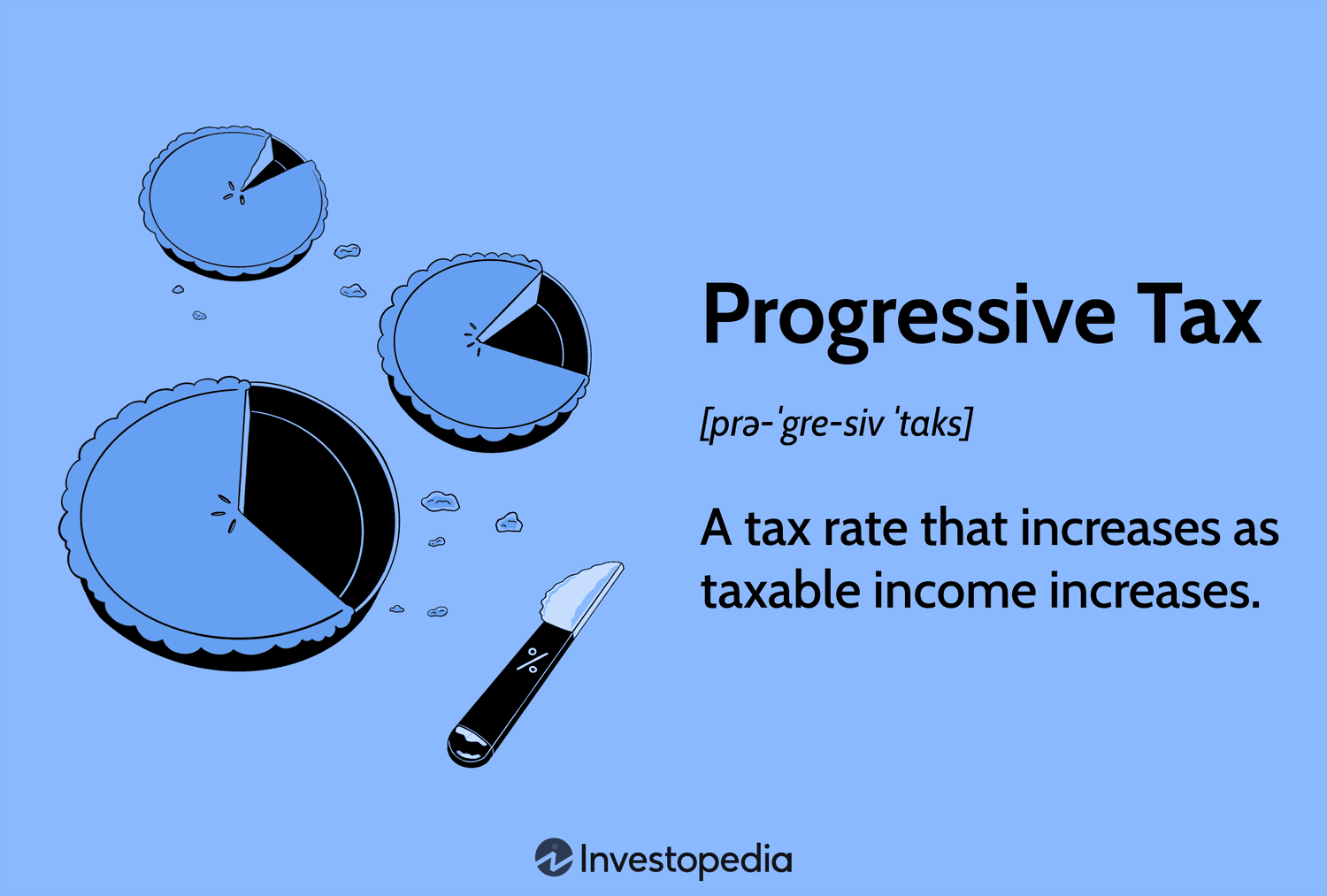
If you’ve ever looked at your paycheck and wondered why the government takes a bigger bite out of higher earners, you’re seeing the progressive tax system in action. At its core, the United States federal income tax is designed to be progressive: the higher your income, the higher the percentage of it you pay in taxes. This approach aims to create a fairer distribution of the tax burden, ensuring those with greater financial resources contribute more to fund public services like infrastructure, defense, education, and social programs.
In 2026, this system remains firmly in place, with seven federal income tax brackets ranging from 10% to 37%. Recent legislation, including the One Big Beautiful Bill Act (OBBBA), has made key elements of the 2017 Tax Cuts and Jobs Act permanent while incorporating inflation adjustments to prevent “bracket creep.” Let’s break it down step by step.
What Makes a Tax System Progressive?
A progressive tax increases the tax rate as taxable income rises. Unlike a flat tax (same rate for everyone) or regressive tax (higher effective rate on lower incomes, like sales taxes), progressive taxation shifts more responsibility to higher earners. The idea is simple: a dollar means more to someone earning $30,000 a year than to someone earning $300,000, so the wealthier person can afford to pay a larger share.
The U.S. federal income tax is the prime example of progressivity. When combined with refundable credits (like the Earned Income Tax Credit), low-income households often pay little to no net federal income tax—or even receive money back—while high earners shoulder the majority of the burden. In fact, the top 50% of taxpayers pay the vast majority of federal income taxes collected.
How the Federal Progressive Income Tax Operates in 2026
The system uses marginal tax rates. Your income isn’t taxed at one single rate; it’s divided into portions (brackets), and each portion is taxed at its own rate. Only the income that falls into a higher bracket gets the higher rate—your entire income isn’t suddenly taxed at the top rate if you cross a threshold.
Taxable income is what remains after subtracting adjustments (e.g., retirement contributions), the standard deduction, or itemized deductions. For 2026, the standard deduction amounts are:
• Single filers or married filing separately: $16,100
• Married filing jointly or qualifying surviving spouses: $32,200
• Heads of household: $24,150
These amounts help reduce taxable income, especially for lower- and middle-income filers.
Here are the 2026 federal income tax brackets (based on taxable income, per IRS adjustments):
Single Filers
• 10%: $0 to $12,400
• 12%: $12,401 to $50,400
• 22%: $50,401 to $105,700
• 24%: $105,701 to $201,775
• 32%: $201,776 to $256,225
• 35%: $256,226 to $640,600
• 37%: Over $640,600
Married Filing Jointly
• 10%: $0 to $24,800
• 12%: $24,801 to $100,800
• 22%: $100,801 to $211,400
• 24%: $211,401 to $403,550
• 32%: $403,551 to $512,450
• 35%: $512,451 to $768,700
• 37%: Over $768,700
(Brackets for married filing separately and head of household follow similar patterns, with head of household generally falling between single and joint.)
Key point: These are marginal rates. If you’re a single filer with $80,000 in taxable income:
• The first $12,400 is taxed at 10%
• The next portion ($12,401 to $50,400) at 12%
• The remainder (up to $80,000) at 22%
Your marginal rate (the rate on your last dollar) is 22%, but your effective rate (total tax divided by total income) is much lower—around 15-18% in this example.
Long-term capital gains and qualified dividends have their own progressive rates (typically 0%, 15%, or 20%, depending on income), adding another layer.
A Real-World Example for 2026
Imagine a single filer with $100,000 in taxable income:
• $12,400 at 10% = $1,240
• $38,000 ($12,401–$50,400) at 12% = $4,560
• $49,600 ($50,401–$100,000) at 22% = $10,912
• Total tax: ~$16,712
• Effective rate: About 16.7%
Even though the top bracket touched is 22%, the overall bite is far less severe thanks to the graduated structure.
Historical Context and Evolution
The progressive income tax began modestly in 1913 after the 16th Amendment allowed it without apportionment among states. Rates were low at first but soared during wars (peaking at 94% in the 1940s). Reforms in the 1980s simplified brackets, and the 2017 TCJA (now permanent via OBBBA) reduced rates and doubled the standard deduction, making the system less progressive for some but more generous for many middle-income households.
Other Progressive Features in the Tax Code
• Estate and gift taxes: High exemptions and rates up to 40% target large inheritances.
• Corporate taxes: While flat at 21% federally, the burden often falls disproportionately on higher-income shareholders.
• Refundable credits: Programs like the Child Tax Credit or EITC can result in negative effective rates for low earners.
State income taxes add variety—some are progressive with multiple brackets, others flat or nonexistent.
The Pros and Cons
Advantages:
• Promotes fairness by aligning taxes with ability to pay.
• Funds essential government programs without overburdening lower earners.
• Reduces income inequality through redistribution via credits and services.
• Acts as an economic stabilizer (lower earners keep more during downturns).
Criticisms:
• High marginal rates might discourage work, investment, or risk-taking.
• The code’s complexity invites loopholes, deductions, and planning that can lower effective rates for the wealthy.
• Some view it as penalizing success or over-redistributive.
• Compliance costs billions annually in time and money.
Final Thoughts
The U.S. progressive tax system isn’t perfect, but it’s a cornerstone of how we fund our society. In 2026, with inflation adjustments and permanent rate structures, it continues to balance equity and incentives. Understanding brackets, deductions, and marginal vs. effective rates empowers you to plan better—whether that’s maximizing retirement contributions, timing income, or claiming available credits.
Taxes affect everyone differently, so consider consulting a tax professional for your specific situation. Knowledge is your best tool in navigating the system.
What are your thoughts on progressivity—fair share or disincentive? Drop a comment below, and let’s discuss!

Leave a Reply